Blog

Where to Watch Spain vs France on a Big Screen in Barcelona

Are you eager to watch the World Cup semi-final between Spain and France on a massive screen surrounded by hundreds of passionate fans? As two of the strongest teams face off for a spot in the final, the match kicks off at 21:00 CEST.

If you want an authentic outdoor or high-energy viewing experience where you can cheer for La Roja, you need to know exactly what to expect in Barcelona to avoid missing out on the action.

What should I look out for before going?

  • Summer Heat and Crowds: July evenings in Barcelona remain incredibly warm, often staying well above 25°C long after dark. Because this is a high-stakes knockout match, popular venues will fill up hours before the whistle. Arrive by 19:30 or 20:00 at the absolute latest. If you show up right before the game, you will be stuck outside or behind massive crowds with zero view of the screens.
  • Seating vs. Standing: Most public squares and popular sports bars operate on a strict first-come, first-served basis with no option to reserve tables on match nights. Wear comfortable shoes, as you will likely be standing or squeezed shoulder-to-shoulder with other fans for hours.
  • Costs and Toilets: Entry to these locations is free, but you will pay premium city-center prices for drinks and food. Expect long lines at the bars and restrooms during halftime.

Three Solid Places to Watch the Match in Barcelona

1. Plaça del Sol (Gràcia)

Plaça del Sol is the beating heart of the Gràcia neighborhood and transforms into a massive open-air living room for major tournament matches. The terrace bars lining the square set up screens outside, and the entire plaza gathers to watch, creating an incredible community atmosphere.

  • What to expect: It is entirely outdoors and draws a diverse local crowd. Because it is a public square, you can sit outside, but table space at bars like Sol Soler or Cafè del Sol is extremely limited. If you do not claim an outdoor table by early afternoon, you will end up sitting on the square’s stone floor or standing at the back.
  • How to get there: Take Metro Line 3 to the Fontana stop, then walk about 5 minutes through the narrow streets of Gràcia.
  • Address: Plaça del Sol, 08012 Barcelona

2. Belushi’s Barcelona

Located just off Plaça Catalunya, Belushi’s is one of the largest and most famous international sports bars in the city. It features massive indoor spaces, a large guest terrace, multiple HD plasma screens, and two giant LED projector screens.

  • What to expect: The crowd here is a loud, high-energy mix of international travelers, expats, and students. Table reservations fill to absolute capacity hours before kick-off. Security will lock the doors once it is full, leaving latecomers stranded on the street. Drinks and pub food come fast, but prices reflect the central tourist location.
  • How to get there: Take Metro Line 1 or 3 directly to Plaça de Catalunya, then walk less than two minutes down Carrer de Bergara.
  • Address: Carrer de Bergara, 3, 08002 Barcelona

3. The George Payne

Situated right on Plaça d’Urquinaona, this massive, multi-level Irish pub is a legendary destination for live sports broadcasting. It features an enormous projector screen in the main salon along with nine supporting HD screens spread across the venue.

  • What to expect: The atmosphere is chaotic, loud, and stadium-like. It draws huge crowds, meaning the background noise frequently drowns out the actual match commentary. Space moves fast, and you will be standing for the duration of the match if you do not arrive early. Getting to the bar during halftime requires physical effort.
  • How to get there: Take Metro Line 1 or 4 straight to the Urquinaona station. The pub sits right outside the station exits.
  • Address: Plaça d’Urquinaona, 5, 08010 Barcelona

4. Watch it online instead?

Are you unable to go to any of these places and you would rather stream the match online? You can find an online streaming guide for the match between Spain and France in the IP Address Guide.

Who will be the hero at the end of the day?

The debate on the streets of Barcelona centers on whether Spain’s structured, collective passing game can withstand the individual brilliance of France’s star players.

  • Lamine Yamal: The local Barcelona prodigy has grown into the creative focal point for Spain. If he can bypass France’s physical defensive unit, his cutting inside to distribute or shoot will be Spain’s primary route to breaking the deadlock. The local crowd expects him to provide the spark.
  • Mikel Oyarzabal: Spain’s tactical discipline relies on clinical finishing when opportunities arise. Oyarzabal is the type of selfless forward who works tirelessly off the ball and pops up in the box to convert crucial, scrappy late goals.
  • Kylian Mbappé: The biggest threat to the Spanish celebrations. Even if Spain dominates possession, Mbappé’s lethal pace on the counter-attack means the crowd will hold its breath every time France regains the ball in their own half.
  • Ousmane Dembélé & Désiré Doué: The French wingers provide immense tactical depth. Dembélé’s unpredictability makes him dangerous in one-on-one situations, while young Doué provides a fresh, energetic spark on the left that Spain’s fullbacks will struggle to contain late in the game.

The Verdict: If Spain controls the midfield tempo, expect a narrow victory driven by a moment of magic from Lamine Yamal. However, if the defensive line sits too high, Kylian Mbappé will exploit the space. Pick your venue early, prepare for the heat, and join the crowd!
Tapas, Taxis, and Travel: A 2026 Budget Guide to Barcelona

Barcelona remains one of the world’s most magnetic cities, blending Mediterranean flair with Gaudí’s architectural dreams. However, as of 2026, the city has implemented various measures to manage its immense popularity, which has impacted local costs. For travelers arriving in the Catalan capital, navigating the balance between world-class tourism and authentic local living requires a bit more strategic planning than in years past.

Whether you are strolling through the Gothic Quarter or heading to the design-heavy districts of Poblenou, here is how to budget for your Barcelona escape.


🍺 Beer and Vermouth: The Catalan Social Hour

In Barcelona, the “after-work” drink is a sacred ritual. While beer is popular, the local tradition of Fer el Vermut (doing vermouth) is an essential experience.

  • Canyes and Estrellas: €2.50 – €3.50. A “canya” (small draught beer) in Barcelona is slightly more expensive than its counterparts in other Spanish regions. Expect to pay a premium at any bar with a view of the sea or a major monument.
  • Artisanal Vermouth: €3.00 – €4.50. Usually served with a slice of orange and an olive, often accompanied by a small bowl of chips or tinned seafood.
  • Craft Beer Scene: €6.00 – €9.00. Barcelona has one of the strongest craft beer cultures in Europe, centered around the Eixample and Sant Antoni neighborhoods.
  • Supermarket: €0.90 – €1.30 for a can of Estrella Damm.

☕ Coffee and the Morning “Bikini”

Coffee culture is robust, with a heavy emphasis on “third-wave” specialty roasters that have taken over the city’s creative hubs.

  • Café amb Llet: €1.80 – €2.50. This is the Catalan version of a latte.
  • Specialty Brews: €3.50 – €4.50. Barcelona is a hub for high-end coffee, so expect prices similar to London or Berlin in trendy spots.
  • The “Bikini”: €4.50 – €6.00. Don’t be confused; in Barcelona, a “Bikini” is a toasted ham and cheese sandwich—the ultimate mid-morning snack.

🚕 Taxis and Urban Mobility

Barcelona’s official taxis are iconic: black with yellow doors. They are highly regulated and generally offer a very professional service.

  • Base Fare: €2.75 – €3.25 depending on the time of day.
  • The Airport Run: Unlike other cities, Barcelona uses a metered system for the airport rather than a flat rate, though there is a minimum charge of €21.00. A typical trip to the center costs roughly €30.00 – €38.00.
  • Public Transport: €2.50 for a single ticket. The T-Usual or T-Casual cards are the most cost-effective ways to use the extensive Metro and tram network.

🍽️ Dining: Catalan Cuisine and Sea Views

Eating in Barcelona ranges from simple beachside “Chiringuitos” to high-concept Michelin dining.

  • Menú del Dia: €14.00 – €19.00. While still a great deal, the lunch menu in Barcelona tends to be a few Euros higher than the prices found in Madrid, reflecting the higher cost of living in the coastal city.
  • Dinner for One: €30.00 – €50.00. This includes a main course like Paella or Fideuà and a glass of Penedès wine.
  • Tapas for Two: €50.00 – €80.00. Shared plates of Patates Braves, Pernil, and Gambes al Pillo add up quickly, especially in the more decorative restaurants of Passeig de Gràcia.

💡 2026 Savvy Traveler Tips

  • Book Gaudí in Advance: In 2026, almost all major monuments (Sagrada Família, Park Güell) require pre-booked time slots. Prices have increased, so factor this into your daily budget.
  • The “Tourist Tax”: Barcelona charges a nightly city tax for all accommodations. Ensure you check if this is included in your booking or if you need to pay it upon arrival.
  • Avoid La Rambla for Food: It is a beautiful walk, but the food prices are significantly inflated. Walk just three blocks in either direction into El Raval or the Gothic Quarter for better quality at 60% of the price.

❓ Traveler FAQ: Barcelona Edition

Are prices similar to Madrid?
Generally, Barcelona is considered 10% to 15% more expensive than Madrid, particularly regarding accommodation and dining out. While a taxi or a beer might cost roughly the same, the high demand for tourism in Barcelona often pushes the “floor” price higher.

Do I need to tip?
Tipping is not traditional in Catalonia. However, in 2026, many high-end restaurants have begun to suggest a 5% service charge. In local spots, rounding up to the nearest Euro is sufficient.

Is it safe to drink the tap water?
Yes, it is perfectly safe, though many locals and visitors dislike the taste due to high mineral content. Many restaurants will offer filtered tap water if you ask for “aigua de l’aixeta.”

Can I use my phone to pay for the Metro?
Yes, as of 2026, the entire TMB (Barcelona Transport) network allows for contactless “tap-and-go” payment using mobile wallets or cards for single journeys.

🐣 Barcelona Easter Guide: Opening Times & Local Tips 🌸

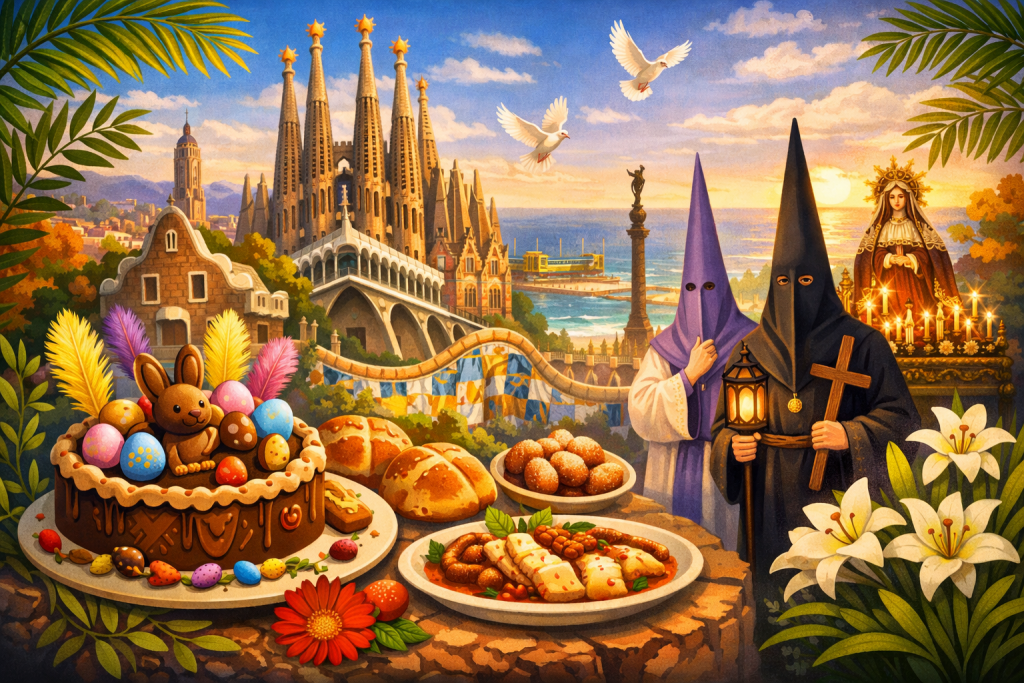
Easter in Barcelona, or Semana Santa, is a captivating mix of solemn tradition and the vibrant energy of spring. While the city doesn’t shut down as completely as other parts of Spain, there are specific local customs and holiday schedules that can catch travelers off guard. From the smell of freshly baked Mona de Pascua to the sight of palm leaves adorning balconies, it is a unique time to experience the Catalan capital.

If you are curious how other European hubs compare during this holiday, you can also check out the Easter opening times in Amsterdam.

Here is everything you need to know about navigating Barcelona during the Easter holidays.


🏛️ Is Barcelona open during Easter?

The quick answer is: Mostly! Barcelona is a major year-round destination, so the tourist infrastructure remains very active. However, Catalonia has its own specific holiday calendar. To stay up to date with specific performances or seasonal gatherings, take a look at the latest Barcelona concerts and events.

  • Good Friday (Viernes Santo): This is a major public holiday. Most shops and supermarkets will be closed. However, restaurants in the city center and major museums typically remain open.
  • Easter Sunday: A day for family. While smaller boutiques in neighborhoods like Gràcia will close, major shopping centers near the port (like Maremagnum) stay open.
  • Easter Monday (Lunes de Pascua): Important! Unlike many other Spanish regions, Easter Monday is a massive holiday in Barcelona and the rest of Catalonia. Most shops and local businesses will be closed on this day.

🖼️ Museums and Attractions

The good news for culture lovers is that Barcelona’s architectural gems rarely take a day off. If you are looking for more inspiration on what to see, browse our guide to Barcelona activities.

  • Sagrada Família & Park Güell: These operate on their usual schedules. However, because Easter is a peak travel period, booking tickets weeks in advance is essential.
  • La Rambla: The city’s most famous boulevard is always buzzing during Easter. You can find more details on exploring attractions like La Rambla here.
  • Picasso Museum & MACBA: Generally open throughout the weekend, but they may have slightly shortened hours on the holiday Monday.

🛍️ Where to Shop

If you need to pick up supplies or fancy some retail therapy, timing is everything.

  • Maremagnum: This is one of the few malls in the city allowed to open on Sundays and public holidays because of its location in the harbor.
  • El Corte Inglés & High Street: Most shops on Passeig de Gràcia and Portal de l’Àngel will be closed on Good Friday, Easter Sunday, and Easter Monday. Plan your shopping for Saturday!
  • Markets: The famous La Boqueria is closed on Sundays and public holidays, so make sure to visit on Thursday or Saturday to stock up on local cheeses and ham.

🍴 Traditional Easter Flavors

Barcelona has its own delicious way of celebrating. You shouldn’t leave without trying:

  1. La Mona de Pascua: This is the star of Catalan Easter. Traditionally a cake with hard-boiled eggs, it has evolved into elaborate chocolate sculptures that you will see in pastry shop windows across the city.
  2. Bunyols de Vent: Sweet, fluffy fritters rolled in sugar, typically eaten during Lent and the Easter period.
  3. Bacallà (Salt Cod): Since tradition historically forbid meat on Fridays, you will find incredible cod dishes on almost every menu during this time.

Local Tip: Easter Monday is the day godparents give the Mona cake to their godchildren. Restaurants will be packed with multi-generational families, so if you plan on dining out on Sunday or Monday, reservations are mandatory.

🚋 Getting Around

The TMB (Metro and Bus) network runs on a Holiday Schedule on Good Friday, Easter Sunday, and Easter Monday. This means trains and buses are slightly less frequent. However, the Metro usually runs late on holiday eves, making it easy to get back to your hotel after dinner.

Enjoy the sea breeze, the chocolate displays, and the festive spirit of Barcelona!

Barcelona Helicopter Tour

Barcelona helicopter tour

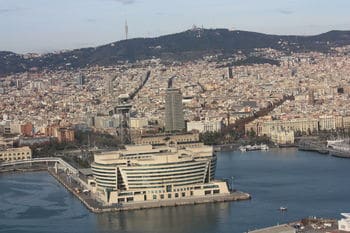
If you are looking for a way to truly elevate your Barcelona experience, a scenic helicopter flight is the ultimate choice. It offers a thrilling escape from the bustling city streets, providing a perspective on the Catalan capital that very few travelers ever get to see. Whether you are celebrating a special occasion or simply want to see the city’s famous grid-patterned streets from above, this is a “must-do” for your 2026 itinerary.

From the air, you can appreciate the architectural genius of Ildefons Cerdà, whose Eixample district looks like a perfect checkerboard from the sky. You’ll glide over the Mediterranean coastline, passing the W Hotel, the Statue of Columbus, and the crowded Barceloneta beaches. The flight continues toward the city’s heart, offering unparalleled views of the Sagrada Família—which is entering its final stages of construction in 2026—and the lush greenery of Park Güell.

One of the most exciting sights this year is the Spotify Camp Nou. As the massive renovation project nears completion, seeing the scale of Europe’s largest stadium from a bird’s-eye view is a highlight for any sports fan. Most tours offer a choice between a 7-minute coastal loop or a 12-minute city and coast “Sky Tour,” ensuring you see landmarks like the Torre Glòries and the Olympic Ring on Montjuïc.

The tour departs from the Barcelona Heliport, conveniently located right by the cruise docks and just a short 10-minute taxi ride from the city center. All seats on the modern helicopters are designed to provide panoramic views, and many packages now include a digital video of your flight so you can relive the excitement at home.

🚁 Don’t miss out on the best views in the city:
👉 Book your Official Barcelona Scenic Helicopter Flight here

Looking for more ways to explore? If you prefer to stay on the ground (or at least closer to it), be sure to check out our guided tours page for expert-led walks through the Gothic Quarter and beyond.

Barcelona El Prat and Girona: Navigating the New Peak of Catalan Aviation

The landscape of European aviation has undergone a seismic shift since the global pandemic. While some major hubs across the continent are still tentatively climbing back to their 2019 benchmarks, the Mediterranean gateway of Barcelona tells a different story—one of rapid recovery, strategic expansion, and a record-breaking surge in passenger numbers. To understand the current state of travel to Catalonia, we must look at the data across the region’s two primary entry points: Barcelona El Prat (BCN) and Barcelona Girona (GRO).


The Numbers: 2019 vs. 2024 and 2025

In 2019, Barcelona El Prat set what was then an all-time high, handling 52.6 million passengers. It was a year of peak global mobility. Meanwhile, Girona Airport—frequently used by low-cost carriers and travelers heading to the Costa Brava—served approximately 1.9 million passengers. Combined, these airports funneled nearly 55 million people into the region.

Fast forward to 2024, and the “recovery” phase is officially over, replaced by a new era of growth. Barcelona El Prat closed 2024 with over 53 million passengers, successfully surpassing its pre-pandemic record. Girona also saw a significant revival, nearing the 2-million-mark again as travelers sought budget-friendly alternatives to the main hub.

As we move through 2025, the projections are even more striking. Aviation analysts expect El Prat to approach 55 million passengers annually, while Girona is expected to see a 10-15% increase in traffic due to new routes from Eastern Europe and the UK. Unlike some European cities that are still struggling to find their footing, Barcelona has not just returned to “normal”—it has exceeded it.

For those interested in how this compares to the Spanish capital, it is worth noting that Madrid also showed incredible resilience. Madrid reached higher levels than before COVID-19 already in 2024, as you can read in this detailed post on Madrid airport stats and passenger trends.


Why the World is Flying to Barcelona

What is driving this relentless demand? The motivations for visiting Barcelona have shifted slightly post-pandemic, but the core appeal remains unshakable.

  • The “Gaudí” Factor and Cultural Heritage: Barcelona remains a global “bucket list” destination. The Sagrada Família, Park Güell, and the Gothic Quarter continue to be the primary magnets for first-time international travelers, particularly from the US and China, markets that have returned in full force in 2024 and 2025.
  • The Rise of “Workations”: Since 2022, Barcelona has become a European capital for digital nomads. The rise of remote work has led to an increase in long-stay visitors who fly in not just for a weekend, but for a month, blending business with Mediterranean lifestyle.
  • Business and MICE Tourism: Barcelona is a perennial leader in the “Meetings, Incentives, Conferences, and Exhibitions” sector. Events like the Mobile World Congress (MWC) and major medical congresses act as massive catalysts for airport traffic, filling business class cabins and high-end hotels.
  • Cruise Turnarounds: As the leading cruise port in the Mediterranean, a significant portion of the flights into El Prat are “turnaround” passengers who fly in to board massive liners or depart for home after their voyage.

Is Barcelona Struggling to Get More Visitors?

It is a common misconception that every city is “struggling” for more tourists. In Barcelona’s case, the struggle is not about attracting visitors, but managing them. The city is currently facing a heated debate regarding “overtourism.”

While the airport numbers are at record highs, the local government has implemented strict regulations on tourist apartments and increased the municipal tourist tax to manage the flow. There is even a significant political divide regarding the expansion of the airport’s third runway. Proponents argue it is necessary to accommodate long-haul flights from Asia, while opponents argue the city has reached its environmental and social capacity. In short: Barcelona is not struggling for visitors; it is struggling to balance its immense popularity with the quality of life for its residents.


Navigating Your Arrival

With both El Prat and Girona seeing record crowds in 2025, the arrival process can be overwhelming. El Prat is situated 12km from the city center, while Girona is roughly 90km away. Given the high volume of travelers, pre-booking your transit is highly recommended to avoid long taxi queues or crowded buses.

For comprehensive information about airport transfers in Barcelona and the chance to book your transport in advance, visit this guide.

Whether you are landing at the bustling terminals of El Prat or the sun-drenched gates of Girona, it is clear that Barcelona remains one of the world’s most resilient and sought-after destinations. The numbers prove that the world is more eager than ever to experience the heart of Catalonia.

How Many Steps Will You Walk in Park Güell If You Explore Everything?

Barcelona is a paradise for people who love walking. The city invites you to move, explore, climb hills, and wander through streets that seem designed for curious feet. But if there is one place where your step counter really starts celebrating, it is Park Güell.

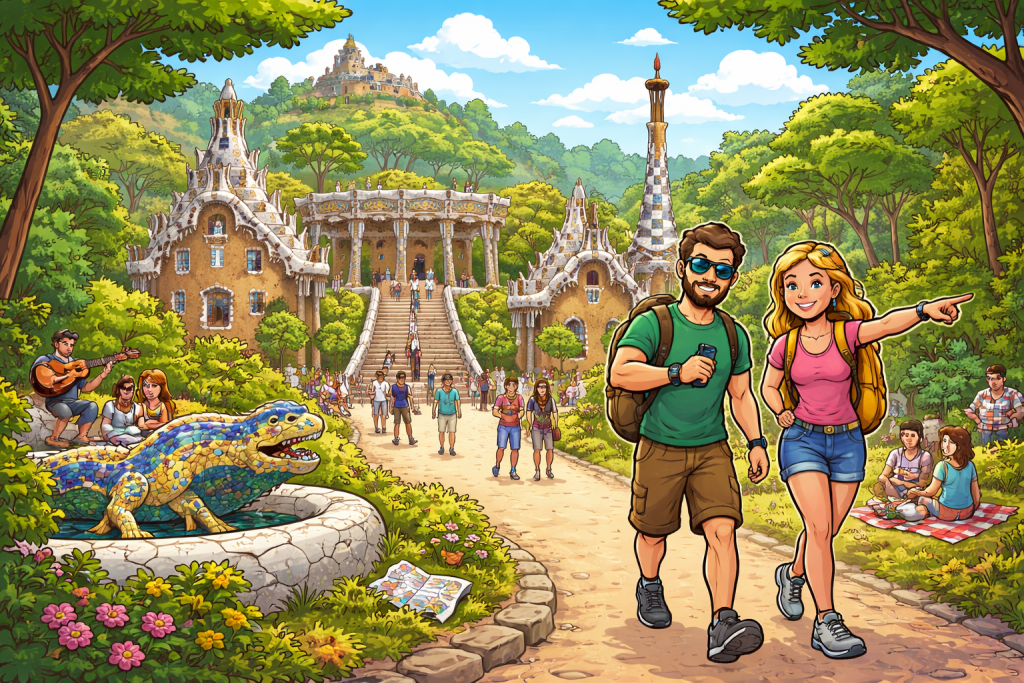
Many visitors come here, take a few photos near the famous colorful benches, and leave. But if you decide to explore Park Güell from A to Z, walking every path, staircase, viewpoint, and forest trail, your fitness tracker will definitely notice.

So the question is simple: How many steps can you realistically walk in Park Güell if you explore it properly?

Let’s take a walk and find out.

If you want more information about the park, opening hours, and tickets, visit our detailed guide to Park Güell in Barcelona. You can also discover many other famous places in the city in our guide to top attractions in Barcelona.


The First Surprise: Park Güell Is Much Bigger Than You Think

Most people imagine Park Güell as a small artistic park with Gaudí decorations.

In reality, it is over 17 hectares (42 acres) and built on a hillside. That means two things:

  1. There are lots of paths
  2. There are lots of stairs

And stairs mean steps. Many steps.

If you only walk around the main monuments — the dragon fountain, the terrace with the famous mosaic bench, and the Hypostyle Hall — you might walk 3,000–4,000 steps.

But if you explore everything, the number climbs quickly.


The Walker’s Route Through Park Güell

Imagine you enter Park Güell with one simple rule:

No shortcuts. No rushing. No golf carts. Just walking.

Good shoes, relaxed pace, curiosity turned on.

Here’s how your steps begin to accumulate.


Entrance Area and Monumental Zone

You enter through the famous main gate on Carrer d’Olot.

Right away you encounter:

  • The dragon fountain
  • The grand staircase
  • The Hypostyle Hall
  • The colorful terrace overlooking Barcelona

Walking around this area properly already adds 1,500–2,000 steps, especially if you circle the terrace and enjoy the view.

And trust me — you will stop often, because the view over Barcelona is spectacular.


Exploring the Upper Paths

Most tourists stop at the terrace.

Walkers continue.

Behind the monument area lies a network of winding paths, stone bridges, tunnels, and forest trails.

These include:

  • The Portico of the Washerwoman
  • Curving viaduct bridges
  • Elevated paths through pine trees
  • Hidden viewpoints

This area is fantastic for walking because it feels more like a forest park than a tourist attraction.

Exploring the upper trails easily adds another 3,000–5,000 steps.


Climbing to the Highest Point

If you want the ultimate Park Güell view, you must walk to Turó de les Tres Creus.

This is the highest hill inside the park.

Getting there involves:

  • Climbing trails
  • Some uneven terrain
  • A final rocky staircase

But once you reach the top, Barcelona stretches below you like a living postcard.

The climb and return adds roughly 1,500–2,000 steps.

Your legs will feel it — but in a good way.


The Hidden Corners Most Tourists Miss

The beauty of Park Güell is not just Gaudí’s architecture.

It’s the unexpected quiet areas.

If you wander without a strict plan, you will find:

  • Small shaded paths
  • Stone arches
  • Natural viewpoints
  • Quiet benches
  • Pine forests

Walking every corner like a curious explorer adds another 2,000–3,000 steps.


Total Step Count: The Reality

If you truly explore Park Güell from A to Z, a realistic step count looks like this:

ActivitySteps
Entrance & Monument Area1,500–2,000
Upper Paths & Bridges3,000–5,000
Climb to Tres Creus1,500–2,000
Extra exploring2,000–3,000

Total: 8,000–12,000 steps

Yes — Park Güell alone can give you half a day’s walking goal.

If you walked there from central Barcelona and back, your pedometer might easily hit 15,000 steps for the day.


Walking Park Güell: The Healthy Tourist Way

Some tourists rush through.

Others look for the shortest path.

But the real experience is slow walking.

Feel the ground under your shoes.

Smell the pine trees.

Watch street musicians.

Sit on the mosaic bench and rest your legs.

You are not in a shopping mall — you are walking inside one of Gaudí’s greatest creations.

And the hills make the exercise surprisingly effective.

A person weighing about 75 kg (165 lbs) may burn around 300–400 calories during a full Park Güell exploration.

Not bad for a sightseeing activity.


FAQ About Walking in Park Güell

Can you walk barefoot in Park Güell?

Technically yes, but it is not a good idea. The paths include gravel, stone, stairs, and sometimes uneven terrain. Your feet will thank you if you wear proper walking shoes.


Can you wear slippers or flip-flops?

You can, but again — not recommended.

Park Güell has hills and stairs, and flip-flops can turn a beautiful walk into an ankle-twisting adventure.

Comfortable sneakers are your best friend here.


Is there an entrance fee?

Yes, the Monumental Zone requires a ticket.

However, parts of the surrounding park area are free. Most visitors buy the ticket to see Gaudí’s famous architectural elements.


Is Park Güell cold in winter?

Barcelona winters are mild, but Park Güell sits on a hill, which means it can feel a bit windy.

Bring a light jacket and you will be perfectly fine.

The upside? Winter visits often mean fewer crowds.


Can you have a picnic in Park Güell?

Yes — in the free park areas, picnics are allowed and quite common.

Just remember:

  • Keep the park clean
  • Respect the nature
  • Don’t picnic inside the Monumental Zone

A small picnic under the pine trees is actually one of the best ways to enjoy the park.


Final Thought: Park Güell Is Made for Walkers

Park Güell is not just a tourist attraction.

It is a walker’s playground.

If you take the time to explore it properly — climbing hills, discovering hidden paths, and enjoying the views — your pedometer will easily record 10,000 steps or more.

And the best part?

Every step comes with art, nature, and the spirit of Gaudí.

So lace up your shoes, enter the park, and start walking.

Your legs might complain a little later.

But your memories will thank you.

Visiting Barcelona on a Budget: Free Things to Do, Cheap Eats, and Money-Saving Tips

If you are Scottish, you already know the golden rule of travel: see everything, spend nothing, complain loudly if forced to buy coffee. Preferably a coffee that costs more than £1.50. Barcelona, luckily, is an excellent city for this noble mission.

So the big question is: can you explore Barcelona in 2026 while spending as little as humanly (or Scottishly) possible?
Short answer: yes.
Long answer: absolutely yes, but you’ll need strategy, discipline, and a willingness to say “nah, that’s too dear” at least 40 times a day.

Welcome to Free Barcelona: the Scottish Edition.


Barcelona on a Budget: A City Built for Tight Wallets

Barcelona is one of those rare European cities where you can wander for days, feel like you’ve “done loads,” and still have coins left in your pocket. It’s walkable, visually rich, culturally dense, and full of places where simply existing is already the attraction.

You can admire architecture, people-watch, soak up street life, sit in parks, explore neighborhoods, and enjoy the Mediterranean vibe without paying an entrance fee every five minutes.

And walking helps burn calories, which is useful when your food budget consists of supermarket bread and mysterious cheese.

If you want to understand just how much you can see on foot, read this first:
https://www.guidebarcelona.net/how-walkable-is-barcelona-really


Free Attractions: Because Paying Is Optional

Let’s start with the obvious: Barcelona itself is the attraction.

Neighborhoods Worth Exploring for £0.00

  • Barri Gòtic – medieval streets, hidden squares, and the joy of getting lost without paying a guide.
  • El Born – lively, artsy, full of character, and excellent for pretending you’re about to enter a museum (but not actually entering).
  • Gràcia – village vibes, plazas, and locals living real lives instead of selling souvenirs.
  • El Raval – raw, multicultural, slightly chaotic, and perfect for observational anthropology.

Just walk. Look up. Look around. Congratulate yourself on not paying for anything.


Free Museums (Yes, Actually Free)

Barcelona museums are surprisingly generous, especially if you plan your timing like a professional penny-pincher.

Free Museum Days

In 2026, most major museums still follow these patterns:

  • First Sunday of every month – free entry for everyone
  • Sunday afternoons – many museums go free after around 3 pm

This applies to places like:

  • major art museums
  • history museums
  • cultural centers
  • contemporary art spaces

Yes, there may be queues.
Yes, queues are free.
Yes, queues are a Scottish specialty.

Pro tip: arrive early, bring a bottle of water (filled from a tap, obviously), and remind yourself how much money you’re saving every minute you stand there.


Churches: Quiet, Beautiful, and Mostly Free

Barcelona’s churches are architectural masterpieces that also double as budget-friendly cultural experiences.

Many churches are free to enter outside peak tourist hours. You get stained glass, stone columns, silence, and a place to sit down without buying a drink.

Which, frankly, is priceless.


Parks: Nature, Views, and Sandwich Consumption Zones

Barcelona does parks extremely well, and parks are excellent because:

  1. They are free
  2. They encourage picnics
  3. They allow you to eat supermarket food without shame

Top Parks for Budget Travelers

  • Parc de la Ciutadella – central, green, lively, and ideal for watching street performers you didn’t pay for
  • Montjuïc – hills, views, walking paths, and cultural sites you can admire from the outside
  • Park viewpoints around the city – free panoramas that would cost £20 elsewhere

Bring a sandwich. Sit. Eat slowly. Feel smug.


Eating for Free (Or Almost): Markets Are Your Best Friends

Now let’s talk food, because this is where Scottish budgeting truly shines.

Free Food Tasting (Sort Of)

Markets are the loophole you’ve been waiting for.

At places like local food markets, you’ll often find:

  • cheese stalls offering samples
  • cured meats being sliced “just to try”
  • olives on toothpicks
  • friendly vendors who enjoy feeding tourists tiny pieces of things

Is it a full meal?
No.
Is it morally acceptable to count it as lunch?
Absolutely.

The Smart Grocery Store Strategy

Instead of restaurants:

  • buy bread from supermarkets
  • grab cheese, ham, tomatoes, olives
  • add fruit
  • assemble sandwiches like a budget architect

Eat in a park. Eat on a bench. Eat with pride.

Barcelona supermarkets are excellent, affordable, and far kinder to your wallet than restaurants anywhere near major attractions.


Water: Tap It Like a Local

Do not buy bottled water unless absolutely necessary.

Barcelona tap water is safe to drink.
It may not win awards for taste, but neither does saving money feel bad.

Bring a reusable bottle. Fill it at:

  • your accommodation
  • public fountains
  • taps in cafés (politely)

Every bottle you don’t buy is a small personal victory.


Getting Around: Feet First, Wallet Second

Taxis are convenient.
Taxis are also expensive.
Therefore: no taxis.

Walk as Much as Possible

Barcelona is flat, compact, and made for walking. Entire days can be spent exploring on foot without realizing how much ground you’ve covered.

Public Transport for Long Distances

When walking no longer feels heroic:

  • buy a multi-ride ticket
  • use buses or metro instead of single tickets
  • avoid rush hour if possible

Public transport is efficient, affordable, and much cheaper than pretending you need a taxi because your legs are “tired.”


Free Events and Street Life

Barcelona constantly hosts:

  • free outdoor concerts
  • neighborhood festivals
  • street performances
  • cultural celebrations

You don’t need tickets. You don’t need reservations. You just need to wander into the right square at the right time.

If there’s music, dancing, or a crowd of locals clapping, congratulations: you found free entertainment.


The Scottish Mindset: How to Truly Win Barcelona

To fully enjoy Barcelona on a shoestring budget, embrace these principles:

  • Walk before you pay
  • Look before you buy
  • Eat before you sit down somewhere expensive
  • Always ask: “Is there a free version of this?”

Most of the time, the answer is yes.

Barcelona rewards curiosity, patience, and a refusal to overpay. You don’t need luxury to enjoy it. You need time, good shoes, and a strong sense of financial self-respect.


Final Thoughts: Barcelona Without Breaking the Bank

Barcelona in 2026 remains one of Europe’s best cities for budget travelers, especially if you approach it with Scottish determination.

You can:

  • explore stunning neighborhoods for free
  • enter museums without paying if you time it right
  • eat well from supermarkets and markets
  • drink tap water
  • walk almost everywhere
  • picnic like a champion

And at the end of the trip, you’ll return home with memories, photos, and—most importantly—money still in your account.

Which, let’s be honest, is the real souvenir.

Is Barcelona Still Worth Visiting Or Is It Too Crowded?

Short answer: yes. Longer answer: yes, but only if you visit with your eyes open, your expectations adjusted, and maybe your alarm clock set a little earlier than you’d like.

Barcelona has officially entered its “everyone wants a piece of me” era. The city is gorgeous, sunny, walkable, culturally rich, beachy, foodie-friendly, and Instagrammable from basically every angle. That combination has consequences. Let’s talk honestly about overtourism, crowds, queues, and whether Barcelona is still worth your precious holiday days.


How many tourists actually visit Barcelona?

Let’s start with the big, slightly intimidating numbers.

Barcelona receives roughly 12–13 million overnight visitors per year, plus several million more day-trippers and cruise passengers who sweep in, take photos, eat paella at noon, and vanish by sunset. On top of that, Spain as a whole welcomes around 80–85 million international tourists annually, consistently ranking among the most visited countries in the world.

In other words: Barcelona is not just popular. It’s globally popular.

And yes, you feel it.


When is Barcelona the most crowded?

If you’re picturing peak crowds, here’s your mental calendar:

  • June, July, August – Absolute high season
  • April, May, September, early October – Still busy, but more manageable
  • November to February – Low season (except Christmas, New Year, and major events)

Summer is the real monster. July and August combine European school holidays, cruise season, beach weather, festivals, and heat that makes everyone move slower. This creates the perfect storm: lots of people, moving at half speed, stopping every five meters to take photos.

Spring and early autumn are busy too, but the vibe changes. People walk faster. Locals are still around. The city feels alive rather than overwhelmed.


Are weekdays actually better than weekends?

Yes. But not magically empty.

Weekdays are noticeably calmer than weekends, especially Tuesday to Thursday. Mondays can still be busy (many people arrive over the weekend), and Fridays start filling up again by noon.

That said, during peak summer, weekdays are also crowded. The difference is subtle, not dramatic. Think “long line” versus “very long line,” not “crowded” versus “peaceful monastery.”

The biggest weekday advantage is timing, not emptiness. Early mornings and late afternoons are your real secret weapons.


Is La Rambla just one long human traffic jam?

On a summer afternoon? Yes. Completely. Unapologetically.

Walking down La Rambla between 11:00 and 19:00 in high season can feel like being gently but firmly herded by humanity itself. You’re not really walking so much as participating in a slow-moving river of people.

But here’s the thing most visitors miss:

  • Early morning La Rambla is actually lovely
  • Late evening La Rambla is relaxed and atmospheric
  • Step one street to the side and it’s suddenly… normal

La Rambla isn’t bad. Poor timing is.


What about museums and attractions? Are there lines everywhere?

Some places? Absolutely.

Expect queues at:

  • Sagrada Família
  • Picasso Museum
  • L’Aquàrium de Barcelona
  • Park Güell viewpoints
  • Popular cable cars and viewpoints

In peak season, yes, you can end up standing in lines. Sometimes long ones. Sometimes surprisingly efficient ones. Online tickets help a lot, but they don’t turn August into February.

That said, not everything is overcrowded. Smaller museums, neighborhood galleries, markets outside the center, and less famous viewpoints remain pleasantly human-scaled, even in summer.


Is Barcelona “too crowded” to enjoy?

Here’s the honest take:
Barcelona is overcrowded in very specific places, at very specific times.

The problem is that most first-time visitors do the same things, in the same order, at the same hours:

  • La Rambla at midday
  • Gothic Quarter at peak lunch time
  • Sagrada Família at noon in August
  • Barceloneta beach at 14:00 on a Sunday

If you do that, yes, Barcelona will feel exhausting.

If you shift just a little:

  • Start earlier
  • Eat later
  • Explore neighborhoods like Gràcia, Poblenou, or Sant Antoni
  • Visit famous sights at opening or late afternoon

…the city suddenly feels friendly again.


Best months to visit Barcelona (crowds vs. joy ratio)

If you want the sweet spot, here’s the unofficial ranking:

Best overall:

  • May
  • Late September
  • Early October

Good, but busier:

  • April
  • June

Hot and crowded (but still fun if you know what you’re getting into):

  • July
  • August

Quiet and underrated:

  • November
  • January
  • February

Winter Barcelona won’t give you beach weather, but it will give you space, short lines, better hotel prices, and locals who look relaxed instead of mildly traumatized.


Is overtourism ruining Barcelona?

Not ruined. Changed.

Locals are more vocal. Regulations are stricter. Short-term rentals are limited. Some neighborhoods are tired. That’s real. But Barcelona is also adapting, redirecting tourism, improving public transport, and protecting residential areas.

As a visitor, you’re not the villain. You just need to be a better-timed tourist.


So… is Barcelona still worth visiting?

Absolutely. Unequivocally. With conditions.

Barcelona is still one of Europe’s most rewarding cities:

  • Architecture that actually makes you stop walking
  • Food that’s casual and excellent at the same time
  • A city beach that somehow works
  • Neighborhoods with real life, not just souvenirs

Overtourism hasn’t killed Barcelona. It has just punished lazy planning.

Visit in the right month. Walk at the right hours. Step off the obvious routes. And Barcelona will still charm you, flirt with you, feed you well, and send you home slightly sunburned and very satisfied.

Just… maybe don’t do La Rambla at noon in August.

Can You Drink Tap Water in Barcelona?

This is one of those questions almost everyone asks — sometimes out loud, sometimes silently — while standing in a Barcelona hotel bathroom, staring at the tap and thinking: “It looks fine… but should I really?”

Short answer: Yes, you can drink tap water in Barcelona.
Long answer: Most people don’t — and that’s actually pretty understandable.

Let’s clear this up calmly, without scare stories, myths, or unnecessary paranoia.

The quick answer (for impatient readers)

  • Barcelona tap water is safe to drink
  • It meets EU drinking water standards
  • It tastes… not great
  • Locals usually drink bottled water
  • Tourists rarely get sick from it

So yes: safe, but not loved.

Why does Barcelona tap water taste strange?

This is the real reason this question keeps coming up.

Barcelona’s water supply comes mainly from rivers like the Llobregat and Ter. The Llobregat in particular has naturally higher mineral and salt content. To make the water safe and consistent, it undergoes heavier treatment than in many northern European cities.

The result?

  • Slightly salty
  • Sometimes metallic
  • Occasionally a hint of chlorine

It’s not dangerous. It’s just… disappointing. Especially if you’re used to places with famously good tap water (looking at you, Scandinavia).

What do locals do?

This tells you almost everything you need to know.

Most people living in Barcelona:

  • drink bottled water at home
  • use tap water for:
    • coffee
    • tea
    • cooking
    • brushing teeth
    • showers (obviously)

They’re not worried about safety. They just don’t love the taste.

When locals willingly buy large packs of bottled water and carry them home in summer heat, that’s a pretty clear signal.

Will tap water make tourists sick?

Very unlikely.

When people feel unwell on vacation, tap water often gets blamed — unfairly. In Barcelona, stomach issues are far more often caused by:

  • more alcohol than usual
  • heavier food
  • later meals
  • heat and dehydration
  • lack of sleep

If you get an upset stomach in Barcelona, it’s almost never the tap water.

Is it safe for children, older people, and pregnant travelers?

Yes.

Barcelona tap water is:

  • safe for children
  • safe for elderly travelers
  • safe during pregnancy

That said, many people still choose bottled water simply because it’s easier to drink enough when it tastes better — especially in hot weather.

What about ice cubes in bars and restaurants?

A classic tourist worry.

Ice cubes in Barcelona:

  • are made from the same safe tap water
  • are perfectly fine
  • are used everywhere

If you’re comfortable drinking coffee, eating soup, or having salad, ice cubes aren’t a special risk.

Coffee, tea, and cooking: no problem at all

Simple rule:
If the water is safe enough to make coffee with, it’s safe enough to drink.

  • Café coffee? Totally fine
  • Tea at your hotel? Fine
  • Rice, pasta, soup? No issue

No restaurant uses bottled water for cooking. If tap water were a problem, the city would know very quickly.

When does bottled water make sense?

Not out of fear — but out of comfort.

Bottled water is a good idea if:

  • you’re sensitive to taste
  • you drink a lot of water during the day
  • you want to avoid chlorine flavor completely
  • you’re on vacation and want zero hassle

Good news: bottled water in Barcelona is cheap and available everywhere.

A large bottle often costs less than a coffee.

Pro tip: buy big, not small

A practical Barcelona trick:

  • Buy large bottles (5–8 liters) at a supermarket
  • Carry a smaller refillable bottle during the day
  • Refill from your supply

It’s cheaper, easier, and better than constantly buying small bottles.

Are there public drinking fountains?

Yes — but expectations matter.

Barcelona has public drinking fountains, especially in parks and along promenades. They are:

  • safe to use
  • more common than many expect
  • not always clearly marked

The taste is the same as regular tap water. Some people are fine with it, others walk to the nearest shop instead.

Summer, heat, and hydration (very important)

Barcelona summers are hot. Sometimes brutally hot.

At that point, the real question isn’t can you drink tap water — it’s:
are you drinking enough water at all?

If taste makes you drink less, bottled water is the better choice. Mild dehydration will ruin your trip faster than any mineral aftertaste ever could.

What about hotel water — is it different?

No.

Hotel tap water is the same municipal supply. Some hotels add:

  • filters
  • softening systems
  • complimentary bottled water

But the base water is the same everywhere.

So… can you drink tap water in Barcelona?

Yes. Absolutely.

To summarize:

  • ✔ Safe
  • ✔ Regulated
  • ✔ EU-approved
  • ✖ Not great tasting
  • ✖ Most locals prefer bottled water

If you drink tap water your first night, nothing will happen. If you switch to bottled water for the rest of the trip, you’ll be doing exactly what most locals do.

The most honest advice

Don’t overthink it.

Drink tap water if you need to.
Buy bottled water if you prefer it.
Stay hydrated — especially in summer.

Barcelona has plenty of things worth worrying about.
Tap water isn’t one of them.

How Walkable Is Barcelona Really?

“How walkable is Barcelona?” is one of those questions where the honest answer starts with: it depends. It depends on your fitness, your age, the time of year, the shoes on your feet, and—very importantly—how ambitious your sightseeing plan is.

Barcelona looks flat and friendly on a map. And in many ways, it is. But when people say “we’ll just walk everywhere,” they often underestimate distances, hills, heat, and how much energy sightseeing actually eats up. Let’s break it down in a realistic, no-nonsense way.

The short answer

Barcelona is very walkable in chunks, but not a city you walk end-to-end casually unless you’re young, fit, and enjoy long urban hikes. Most visitors will walk 8–15 km per day without even realizing it. Push hard, and you’ll hit 18–22 km. Do that three days in a row and your feet will absolutely file a complaint.

Walking inside the city: easy and enjoyable

The historic core of Barcelona is excellent for walking. Neighborhoods like El Born, the Gothic Quarter, El Raval, and parts of Eixample are built for strolling, not rushing.

Sidewalks are wide, streets are well marked, cafés appear exactly when your legs need a break, and the city feels alive at walking pace. This is where Barcelona really shines.

If your day is mostly:

  • Old Town wandering
  • Tapas hopping
  • Beach promenades
  • Shopping streets like Passeig de Gràcia

Then yes—Barcelona is extremely walkable.

But let’s talk distances (this is where reality kicks in)

Many first-time visitors underestimate how spread out the “must-see” sights actually are.

Here’s a realistic breakdown of a classic tourist day on foot:

  • Sagrada Família → Casa Batlló
    About 2.5 km (30–35 minutes walking)
  • Casa Batlló → Plaça de Catalunya → Old Town wandering
    Add 2–3 km easily, depending on detours
  • Old Town → Beach promenade
    Another 1.5–2 km

At this point, without even trying, you’re already at 7–9 km for the day.

What about Parc Güell? (Spoiler: it’s not “just uphill”)

Parc Güell is often the moment people realize Barcelona isn’t entirely flat.

  • The park sits on a hill
  • The last part is steep
  • In summer, it’s hot
  • In winter, it’s still a climb

Walking there from central areas like Gràcia or Eixample adds 3–4 km, plus elevation. Walking inside the park easily adds another 1–2 km.

For many visitors—especially older travelers—this is where the fun turns into effort.

And what about Camp Nou?

Here’s a common mistake: assuming Camp Nou is close to “everything else.”

It isn’t.

  • From Plaça de Catalunya: ~5 km
  • From Sagrada Família: ~6 km
  • From the beach: ~7 km

Walking there is doable, but it’s a commitment. You’re looking at 1–1.5 hours one way, often through less scenic residential areas.

Most locals don’t walk to Camp Nou. They take the metro. There’s a reason.

If you’re older (or just not into marathon walking)

Barcelona is absolutely doable for older visitors—but planning matters.

A comfortable daily walking range for many older travelers is:

  • 4–7 km if you want to enjoy the day
  • 8–10 km if you’re active and pace yourself
  • More than that? Expect sore knees, tired backs, and skipped evenings

The good news: Barcelona’s public transport is excellent, clean, and easy to combine with walking.

How public transport works (quick and simple)

Barcelona’s public transport system is built to reduce walking, not replace it completely.

Metro

  • Fast, frequent, reliable
  • Covers almost all major sights
  • Stations usually have escalators (not always elevators)

Buses

  • Great for sightseeing routes
  • More scenic than the metro
  • Slower but easier on the legs

Tickets

  • Most visitors use a multi-ride card (like T-casual)
  • One ticket works on metro, buses, and trams
  • Transfers are included within a time window

The smart strategy? Walk locally, ride between areas.

Taxis: underrated and very practical

Taxis in Barcelona are:

  • Easy to find
  • Metered (no haggling)
  • Reasonably priced compared to many European capitals

A few practical tips:

  • Short city rides often cost €8–15
  • Great for skipping hills or saving energy late in the day
  • Especially useful at night or after long sightseeing days

If your feet are done and dinner is still calling, a taxi can save your evening.

A smart, walkable Barcelona strategy

Instead of asking “Can I walk everywhere?”, ask:
“Where should I walk, and where should I ride?”

A realistic daily plan:

  • Walk inside one or two neighborhoods
  • Use metro or taxi between major sights
  • Save hills (like Parc Güell) for mornings
  • Keep evenings walk-light

This approach keeps daily walking in the 6–10 km range, which is perfect for most people.

Shoes, heat, and expectations

Three final truths:

  1. Good shoes matter more than fitness
  2. Summer heat multiplies effort
  3. Barcelona looks smaller on maps than it feels on foot

If you plan smart, Barcelona feels human-scaled, friendly, and joyful to explore. If you try to walk everything “because it looks close,” it can quietly exhaust you by day three.

So… how walkable is Barcelona really?

Barcelona is one of Europe’s best cities for walking, as long as you:

  • Respect distances
  • Mix walking with transport
  • Don’t treat every day like a fitness challenge

Walk it wisely, and the city unfolds beautifully—one neighborhood, one café stop, one shaded street at a time.