Barcelona is a paradise for people who love walking. The city invites you to move, explore, climb hills, and wander through streets that seem designed for curious feet. But if there is one place where your step counter really starts celebrating, it is Park Güell.
Many visitors come here, take a few photos near the famous colorful benches, and leave. But if you decide to explore Park Güell from A to Z, walking every path, staircase, viewpoint, and forest trail, your fitness tracker will definitely notice.
So the question is simple: How many steps can you realistically walk in Park Güell if you explore it properly?
Let’s take a walk and find out.
If you want more information about the park, opening hours, and tickets, visit our detailed guide to Park Güell in Barcelona. You can also discover many other famous places in the city in our guide to top attractions in Barcelona.
The First Surprise: Park Güell Is Much Bigger Than You Think
Most people imagine Park Güell as a small artistic park with Gaudí decorations.
In reality, it is over 17 hectares (42 acres) and built on a hillside. That means two things:
- There are lots of paths
- There are lots of stairs
And stairs mean steps. Many steps.
If you only walk around the main monuments — the dragon fountain, the terrace with the famous mosaic bench, and the Hypostyle Hall — you might walk 3,000–4,000 steps.
But if you explore everything, the number climbs quickly.
The Walker’s Route Through Park Güell
Imagine you enter Park Güell with one simple rule:
No shortcuts. No rushing. No golf carts. Just walking.
Good shoes, relaxed pace, curiosity turned on.
Here’s how your steps begin to accumulate.
Entrance Area and Monumental Zone
You enter through the famous main gate on Carrer d’Olot.
Right away you encounter:
- The dragon fountain
- The grand staircase
- The Hypostyle Hall
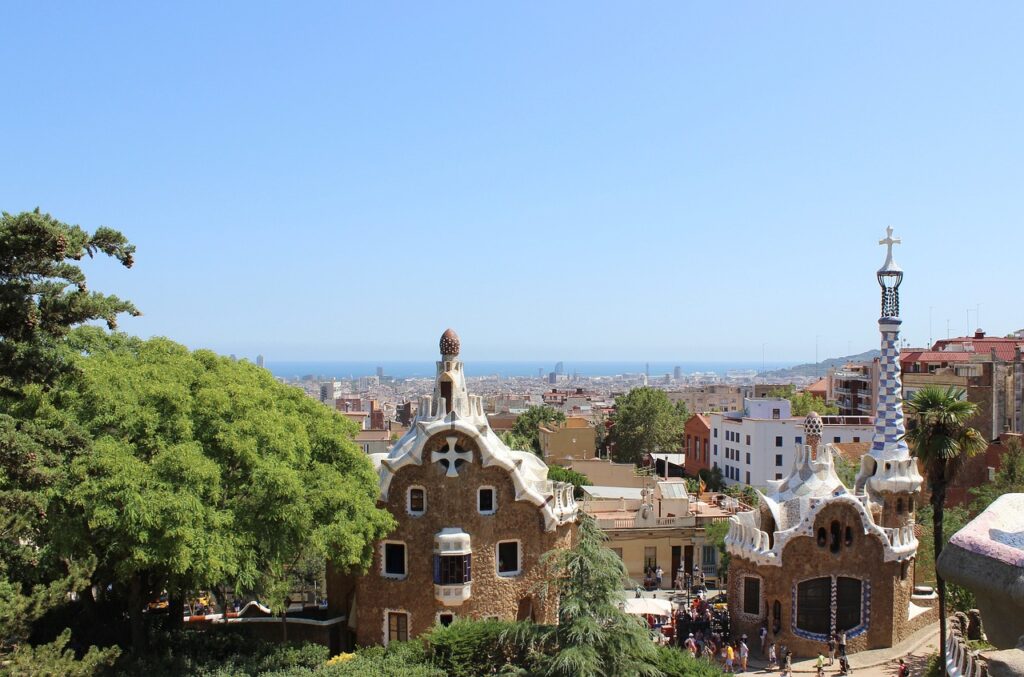
- The colorful terrace overlooking Barcelona
Walking around this area properly already adds 1,500–2,000 steps, especially if you circle the terrace and enjoy the view.
And trust me — you will stop often, because the view over Barcelona is spectacular.
Exploring the Upper Paths
Most tourists stop at the terrace.
Walkers continue.
Behind the monument area lies a network of winding paths, stone bridges, tunnels, and forest trails.
These include:
- The Portico of the Washerwoman
- Curving viaduct bridges
- Elevated paths through pine trees
- Hidden viewpoints
This area is fantastic for walking because it feels more like a forest park than a tourist attraction.
Exploring the upper trails easily adds another 3,000–5,000 steps.
Climbing to the Highest Point
If you want the ultimate Park Güell view, you must walk to Turó de les Tres Creus.
This is the highest hill inside the park.
Getting there involves:
- Climbing trails
- Some uneven terrain
- A final rocky staircase
But once you reach the top, Barcelona stretches below you like a living postcard.
The climb and return adds roughly 1,500–2,000 steps.
Your legs will feel it — but in a good way.
The Hidden Corners Most Tourists Miss
The beauty of Park Güell is not just Gaudí’s architecture.
It’s the unexpected quiet areas.
If you wander without a strict plan, you will find:
- Small shaded paths
- Stone arches
- Natural viewpoints
- Quiet benches
- Pine forests
Walking every corner like a curious explorer adds another 2,000–3,000 steps.
Total Step Count: The Reality
If you truly explore Park Güell from A to Z, a realistic step count looks like this:
| Activity | Steps |
|---|---|
| Entrance & Monument Area | 1,500–2,000 |
| Upper Paths & Bridges | 3,000–5,000 |
| Climb to Tres Creus | 1,500–2,000 |
| Extra exploring | 2,000–3,000 |
Total: 8,000–12,000 steps
Yes — Park Güell alone can give you half a day’s walking goal.
If you walked there from central Barcelona and back, your pedometer might easily hit 15,000 steps for the day.
Walking Park Güell: The Healthy Tourist Way
Some tourists rush through.
Others look for the shortest path.
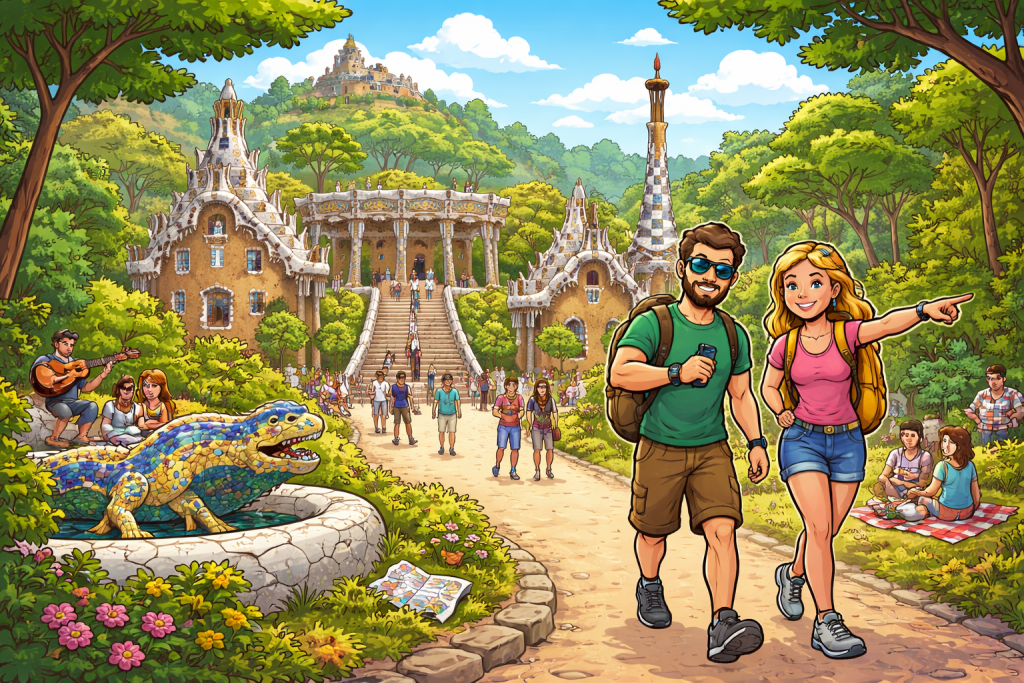
But the real experience is slow walking.
Feel the ground under your shoes.
Smell the pine trees.
Watch street musicians.
Sit on the mosaic bench and rest your legs.
You are not in a shopping mall — you are walking inside one of Gaudí’s greatest creations.
And the hills make the exercise surprisingly effective.
A person weighing about 75 kg (165 lbs) may burn around 300–400 calories during a full Park Güell exploration.
Not bad for a sightseeing activity.
FAQ About Walking in Park Güell
Can you walk barefoot in Park Güell?
Technically yes, but it is not a good idea. The paths include gravel, stone, stairs, and sometimes uneven terrain. Your feet will thank you if you wear proper walking shoes.
Can you wear slippers or flip-flops?
You can, but again — not recommended.
Park Güell has hills and stairs, and flip-flops can turn a beautiful walk into an ankle-twisting adventure.
Comfortable sneakers are your best friend here.
Is there an entrance fee?
Yes, the Monumental Zone requires a ticket.
However, parts of the surrounding park area are free. Most visitors buy the ticket to see Gaudí’s famous architectural elements.
Is Park Güell cold in winter?
Barcelona winters are mild, but Park Güell sits on a hill, which means it can feel a bit windy.
Bring a light jacket and you will be perfectly fine.
The upside? Winter visits often mean fewer crowds.
Can you have a picnic in Park Güell?
Yes — in the free park areas, picnics are allowed and quite common.
Just remember:
- Keep the park clean
- Respect the nature
- Don’t picnic inside the Monumental Zone
A small picnic under the pine trees is actually one of the best ways to enjoy the park.
Final Thought: Park Güell Is Made for Walkers
Park Güell is not just a tourist attraction.
It is a walker’s playground.
If you take the time to explore it properly — climbing hills, discovering hidden paths, and enjoying the views — your pedometer will easily record 10,000 steps or more.
And the best part?
Every step comes with art, nature, and the spirit of Gaudí.
So lace up your shoes, enter the park, and start walking.
Your legs might complain a little later.
But your memories will thank you.