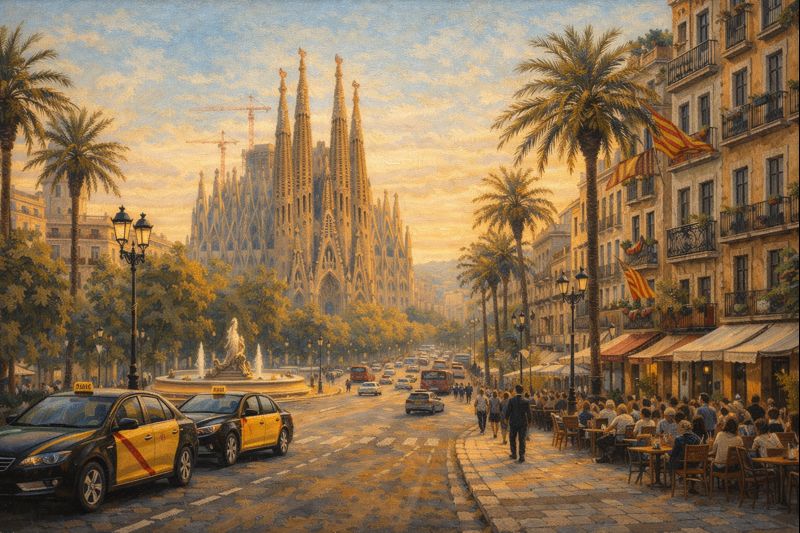
Barcelona remains one of the world’s most magnetic cities, blending Mediterranean flair with Gaudí’s architectural dreams. However, as of 2026, the city has implemented various measures to manage its immense popularity, which has impacted local costs. For travelers arriving in the Catalan capital, navigating the balance between world-class tourism and authentic local living requires a bit more strategic planning than in years past.
Whether you are strolling through the Gothic Quarter or heading to the design-heavy districts of Poblenou, here is how to budget for your Barcelona escape.
🍺 Beer and Vermouth: The Catalan Social Hour
In Barcelona, the “after-work” drink is a sacred ritual. While beer is popular, the local tradition of Fer el Vermut (doing vermouth) is an essential experience.
- Canyes and Estrellas: €2.50 – €3.50. A “canya” (small draught beer) in Barcelona is slightly more expensive than its counterparts in other Spanish regions. Expect to pay a premium at any bar with a view of the sea or a major monument.
- Artisanal Vermouth: €3.00 – €4.50. Usually served with a slice of orange and an olive, often accompanied by a small bowl of chips or tinned seafood.
- Craft Beer Scene: €6.00 – €9.00. Barcelona has one of the strongest craft beer cultures in Europe, centered around the Eixample and Sant Antoni neighborhoods.
- Supermarket: €0.90 – €1.30 for a can of Estrella Damm.
☕ Coffee and the Morning “Bikini”
Coffee culture is robust, with a heavy emphasis on “third-wave” specialty roasters that have taken over the city’s creative hubs.
- Café amb Llet: €1.80 – €2.50. This is the Catalan version of a latte.
- Specialty Brews: €3.50 – €4.50. Barcelona is a hub for high-end coffee, so expect prices similar to London or Berlin in trendy spots.
- The “Bikini”: €4.50 – €6.00. Don’t be confused; in Barcelona, a “Bikini” is a toasted ham and cheese sandwich—the ultimate mid-morning snack.
🚕 Taxis and Urban Mobility
Barcelona’s official taxis are iconic: black with yellow doors. They are highly regulated and generally offer a very professional service.
- Base Fare: €2.75 – €3.25 depending on the time of day.
- The Airport Run: Unlike other cities, Barcelona uses a metered system for the airport rather than a flat rate, though there is a minimum charge of €21.00. A typical trip to the center costs roughly €30.00 – €38.00.
- Public Transport: €2.50 for a single ticket. The T-Usual or T-Casual cards are the most cost-effective ways to use the extensive Metro and tram network.
🍽️ Dining: Catalan Cuisine and Sea Views
Eating in Barcelona ranges from simple beachside “Chiringuitos” to high-concept Michelin dining.
- Menú del Dia: €14.00 – €19.00. While still a great deal, the lunch menu in Barcelona tends to be a few Euros higher than the prices found in Madrid, reflecting the higher cost of living in the coastal city.
- Dinner for One: €30.00 – €50.00. This includes a main course like Paella or Fideuà and a glass of Penedès wine.
- Tapas for Two: €50.00 – €80.00. Shared plates of Patates Braves, Pernil, and Gambes al Pillo add up quickly, especially in the more decorative restaurants of Passeig de Gràcia.
💡 2026 Savvy Traveler Tips
- Book Gaudí in Advance: In 2026, almost all major monuments (Sagrada Família, Park Güell) require pre-booked time slots. Prices have increased, so factor this into your daily budget.
- The “Tourist Tax”: Barcelona charges a nightly city tax for all accommodations. Ensure you check if this is included in your booking or if you need to pay it upon arrival.
- Avoid La Rambla for Food: It is a beautiful walk, but the food prices are significantly inflated. Walk just three blocks in either direction into El Raval or the Gothic Quarter for better quality at 60% of the price.
❓ Traveler FAQ: Barcelona Edition
Are prices similar to Madrid?
Generally, Barcelona is considered 10% to 15% more expensive than Madrid, particularly regarding accommodation and dining out. While a taxi or a beer might cost roughly the same, the high demand for tourism in Barcelona often pushes the “floor” price higher.
Do I need to tip?
Tipping is not traditional in Catalonia. However, in 2026, many high-end restaurants have begun to suggest a 5% service charge. In local spots, rounding up to the nearest Euro is sufficient.
Is it safe to drink the tap water?
Yes, it is perfectly safe, though many locals and visitors dislike the taste due to high mineral content. Many restaurants will offer filtered tap water if you ask for “aigua de l’aixeta.”
Can I use my phone to pay for the Metro?
Yes, as of 2026, the entire TMB (Barcelona Transport) network allows for contactless “tap-and-go” payment using mobile wallets or cards for single journeys.


